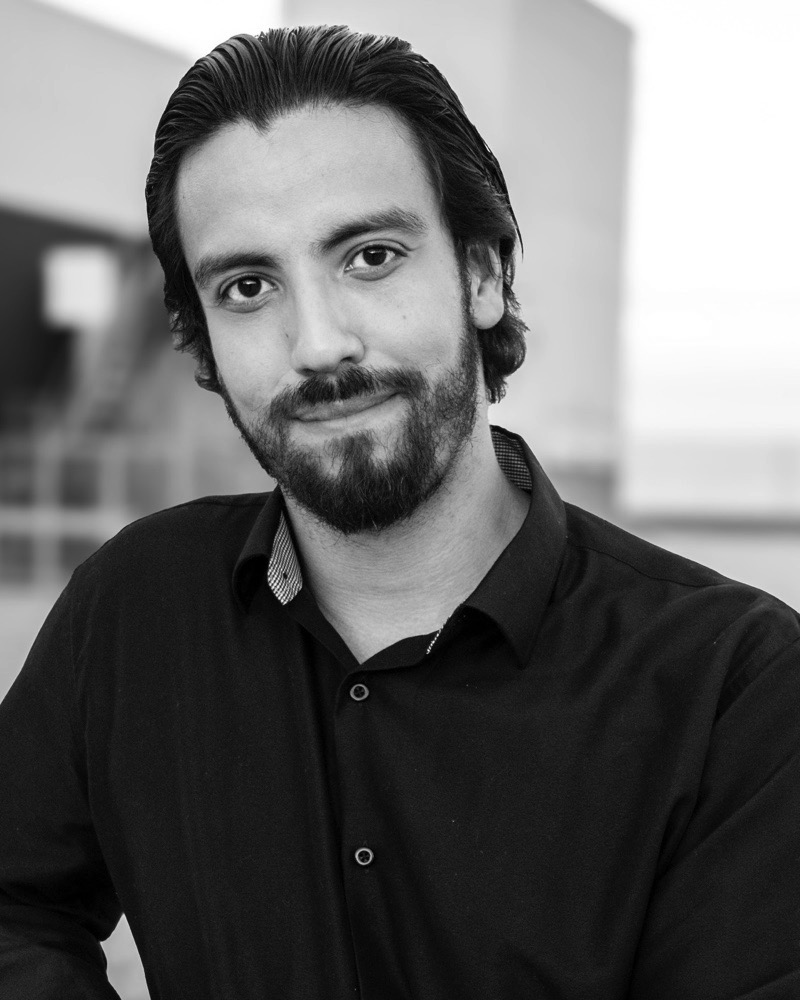
Sam Graham
Radiotherapy field service. Stress is the day job.
§ 01 / Inheritance where it came from
I did not come to machines on my own.
My mother taught me how to learn past short-term memorization. The habit she handed down assumes that what I learn is permanent, and understood well enough to apply in any domain.
Three men stood in for a father at different times. My grandfather kept Caterpillar excavators digging. My stepfather kept jets flying for the Venezuelan air force. My uncle kept radar sets alive for the US Navy. In my households we always tried repairing first, even if it took weeks.
I should admit that I do not enjoy fixing broken things. Repair is always the same sum: the price of a new one, against the cost of the repair plus the cost of the downtime. For a blender that sum almost never favors repair. Two weeks without a blender costs more than the blender. For a machine that treats patients, the downtime term is enormous, and the sum always says the same thing: fix it, and fix it now. That sum is the whole of field service.
At eight I wanted to play a PlayStation on a television from the seventies. The television had an antenna socket and nothing else; the PlayStation had AV out and nothing else. The VHS player had AV in on one side and antenna out on the other. That was the adapter. Nothing was broken. The parts had not been introduced.
§ 02 / Education the degree
An engineering school was the whole aim.
I arrived in the United States at twelve. From then until the end of high school the aim was admission to an engineering school. I had three distractions: soccer, video games, and Stargate and Doctor Who. The last matters most. It is where my hope for technology and for people comes from. We are meant to reach every star there is.
At Georgia Tech I set out to finish what my mentors had never been given the chance to start: a four-year engineering degree. I chose aerospace because it was called the hardest and sat closest to the fiction I loved. Aerodynamics turned out narrow and dull, and only four classes of it. System dynamics was the one that landed: the control of electromechanical systems, and under it a formal account of how anything decides and corrects itself. I finished the degree.
An internship at an aircraft maker showed me an engineer's life in a corporation. A cog, with no say in the system for the first ten years, and a caste line between the people who design, the people who build the prototype and the people who make the thing. I wanted all three, not CAD sent down a chute.
§ 03 / The field full-time travel
The machine was the same everywhere; the building never was.
I took an installation engineer job at a radiotherapy OEM because it was full-time travel. The tinkering and the degree met in it. The work was physical, often in harsh places, and I loved it.
Efficiency had a reward. Finish the day's work and the city was mine. I spent those years asking locals how their systems worked: payment, power, roads, transit, service, politics. Whatever the domain, the failures trace to the same source: human error in the procedure. I want to focus on creating technology implementations that reduce the cognitive load of logistical, operational and administrative tasks during a time-sensitive customer interaction.
sam@elastic-engineering.com
End of sheet · EE-DOC-003 · Rev A · Used on the cover sheet. The case is Elastic Service (EE-DOC-101); the product is Elastic Knowledge Graph (EE-DOC-102).